Category: Blog

How Uganda Travel Industry Gives Back to Nature
Uganda is often called the Pearl of Africa because of its green hills, wide savannahs, thick rainforests, and shining lakes. Tourists come from all over the world to see mountain gorillas in Bwindi, lions in Queen Elizabeth National Park, and the powerful Murchison Falls. But behind every safari car rental Uganda, lodge, and tour guide, there is a bigger story. Uganda’s travel industry is not only about showing visitors beautiful places. It is also about protecting nature and supporting the communities that live close to wildlife.

Over the years, the tourism sector in Uganda has become one of the strongest supporters of conservation. From national park fees to eco-friendly lodges and community projects, the industry plays an important role in giving back to nature.

Supporting National Parks Through Tourism Revenue

One of the main ways the travel industry gives back to nature is through park fees and permits. Every tourist who visits a national park in Uganda pays an entrance fee. Those who go gorilla trekking or chimpanzee tracking pay special permit fees. This money is collected by the Uganda Wildlife Authority and used to protect wildlife and manage national parks.

For example, gorilla trekking permits are expensive compared to regular park entry tickets. However, the money helps fund ranger patrols, veterinary care for gorillas, and anti-poaching activities. Rangers work day and night to make sure animals are safe from illegal hunters. Without tourism revenue, it would be very difficult to protect endangered species like mountain gorillas.

Tourism also helps maintain roads inside parks, build ranger posts, and support research programs. This means that every traveler who books a safari, including those enjoying self-drive safaris across Uganda’s national parks, is directly contributing to conservation efforts.

Fighting Poaching and Wildlife Crime

Poaching has been a serious problem in many African countries. Uganda is no exception. In the past, animals like elephants and rhinos were hunted for ivory and horns. However, tourism has helped reduce this threat.

When communities see that wildlife brings income through tourism, they are more likely to protect it. Lodges, tour companies, and guides depend on healthy wildlife populations. As a result, they work closely with park authorities to report suspicious activities.

Tourism money also helps pay for and train rangers. Well-trained rangers patrol protected areas and remove illegal traps set for animals. In places like Murchison Falls and Queen Elizabeth National Park, strong partnerships between conservation groups and the travel industry have helped reduce poaching.

The return of rhinos to Ziwa Rhino Sanctuary is another example. Tourism has helped fund the protection and breeding of rhinos, with the hope that they will one day return to the wild in Uganda’s national parks.

Promoting Eco-Friendly Lodges and Camps

Many safari lodges in Uganda are built with nature in mind. Instead of cutting down large areas of forest, eco-lodges are designed to blend into the environment. Some use solar power for electricity and heat water using solar energy. Others collect rainwater and reduce plastic waste.

These eco-friendly practices reduce the impact of tourism on the environment. For example, lodges near Bwindi Impenetrable Forest use local materials like wood and stone. They employ local workers and buy food from nearby farmers. This reduces transport pollution and supports the local economy.

Some camps limit the number of guests they host at a time. This reduces pressure on the environment and ensures that wildlife is not disturbed. Responsible tour operators also teach visitors about respecting nature, such as keeping a safe distance from animals and not littering in parks.

Empowering Local Communities

Nature conservation cannot succeed without the support of local communities. Many people living near national parks once depended on forests for firewood, hunting, and farming. When parks were created, access to these resources was limited. Tourism has helped provide alternative sources of income.

Today, many local people work as guides, lodge staff, drivers, and craft sellers. Cultural tourism projects allow visitors to experience traditional dances, food, and storytelling. A percentage of park fees is also shared with surrounding communities. This money is used to build schools, health centers, and water projects.

In areas around Bwindi and Mgahinga, community groups run handicraft shops and cultural villages. Visitors who come for gorilla trekking often buy handmade baskets and souvenirs. This gives families a steady income and reduces the need to depend on forest resources.

By creating jobs and opportunities, the travel industry helps communities see wildlife as a valuable asset rather than a threat.

Encouraging Sustainable Travel Practices

Tour operators in Uganda are increasingly promoting responsible tourism. This includes small group safaris, guided nature walks, and educational tours. Travelers are encouraged to respect wildlife rules, avoid single-use plastics, and support local businesses.

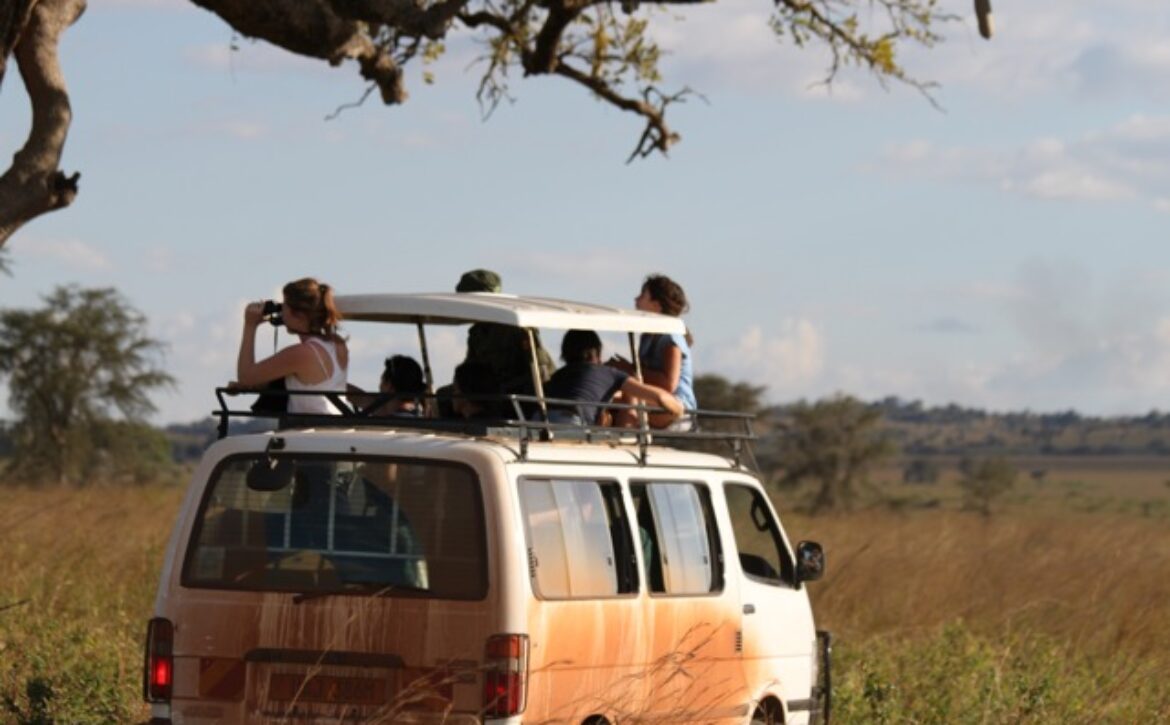
Uganda self-drive safaris are also becoming popular among independent travelers. When managed responsibly, these trips allow visitors to explore Uganda at their own pace while still following park guidelines. Clear rules about speed limits, staying on marked tracks, and proper waste disposal help protect wildlife habitats.

Some companies also organize tree planting activities as part of safari experiences. Visitors can plant a tree to help restore degraded land. This creates a personal connection between travelers and the environment.

Protecting Endangered Species

Uganda is home to several endangered species, including mountain gorillas, chimpanzees, and shoebill storks. The travel industry plays a key role in their survival.

Gorilla tourism is one of the best examples of conservation success. In the past, mountain gorillas were close to extinction. Today, their numbers have increased partly because of strict protection funded by tourism. Veterinary teams monitor gorilla families and treat injured or sick individuals.

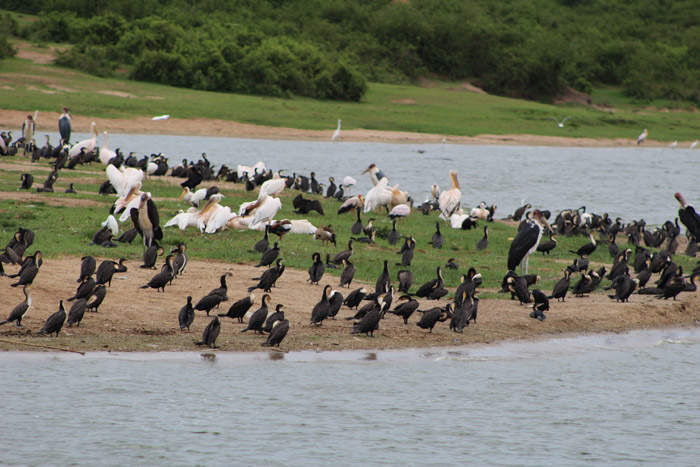
Chimpanzee tracking in Kibale Forest also supports conservation. Funds from permits help protect forest habitats and support research on primates. Birdwatching tourism has created awareness about rare bird species and the importance of wetland protection.

Because wildlife attracts tourists, there is a strong reason to keep habitats safe and healthy.

Supporting Conservation Education

Another important contribution of the travel industry is conservation education. Many lodges and tour companies provide information to guests about Uganda’s ecosystems and wildlife. Guides are trained to explain animal behavior, plant species, and conservation challenges.

Schools near national parks sometimes receive support from tourism companies. Conservation clubs teach children the value of protecting wildlife. When young people understand the benefits of tourism, they grow up with a positive attitude toward nature.

International partnerships between Ugandan tour operators and conservation organizations also help raise global awareness about protecting endangered species.

Reducing Human Wildlife Conflict

In some areas, wildlife can damage crops or threaten livestock. This can create tension between communities and park authorities. Tourism revenue has helped reduce these conflicts.

For example, funds are sometimes used to build trenches or fences around park boundaries to prevent animals from entering farms. Community projects also provide compensation or alternative livelihoods for affected families.

When people benefit from tourism, they are more willing to work together to find peaceful solutions.

A Shared Responsibility for the Future

Uganda’s travel industry understands that its success depends on healthy ecosystems. Without forests, rivers, and wildlife, there would be no safaris, no gorilla trekking, and no nature experiences to offer visitors.

The partnership between tourism, conservation agencies, and local communities has created a model where travel supports environmental protection. While challenges such as climate change and population growth remain, the progress made so far is encouraging.

Every time a traveler books a safari, stays in an eco-lodge, or explores the country’s parks, they become part of this conservation story. The Uganda travel industry continues to prove that tourism, when managed responsibly, can protect nature instead of harming it.

In this way, Uganda is not only welcoming visitors to discover its beauty. It is also showing how travel can be a powerful force for protecting the natural world for future generations.

 

Read More

Best Wilderness Safari Activities in Kidepo

The Kidepo valley national park harbors a great diversity of animal species than other parks in Uganda. These include carnivores, ungulates, and primates. Here are some of the top activities to experience during your visit to Kidepo:

Game Drives in Kidepo

The major activity is game drives in search of the various exotic animals and plants. The best times for game viewing are early morning at 6 am or later in the evening about 5 pm. The game drives are usually done in the Narus valley which is a plain enclosed by distant mountains because the valley has water much of the year, many animals congregate here making it easier to sight them. Watch the animals in the grasslands across a large spectrum. Visit the Katurum kopje, which will provide superb views of the scenery across the valley.

Here is a sneak peek into the wildlife fauna that will cross your path and catch your sight: Zebras, Duikers, Jackson’s hartebeests, Elephants, Lions, Elands, Bat Eared Fox, Geunther’s Dik-Dik, Jackals, Rothschild Giraffes, Striped Hyenas, Klipsinger, Mountain Reedbucks, Buffalos, Defassa Waterbucks, Cheetah, Kongoni, Kobs, Pata Monkeys, Bush Pigs and the only park with Ostriches. The flora includes; Savannah, Borassus palms, Sausage Trees and Acacia.  To say that the list is exhaustive would be far from the truth.

Visiting Kidepo Valley National Park would add an ounce of description to every category of wildlife mentioned above. Lions will not just be lions but tree climbing lions poised in sausage trees or sprawled on rocks at the entrance of Apoka Park. You will not just tell a story of a crocodile but that of unique crocodiles adapted to the arid conditions of the park measuring 2.5 meters as opposed to the usual 4 meters. Visiting Kidepo not only gives you a chance to check the box against sights, sounds, wildlife species, and birds, but leaves you with a story to tell about each bird, animal, tree or rock.

Bird Watching

Birding is a pleasure in Kidepo valley national park. 475 bird species and many more that have not been formally recorded thrive in this remote yet beautiful park making the park only second to Queen Elizabeth national park in the realm of bird species. The park being savannah, it is easy to spot the birds as you move along. Birding is best in the morning or evening but one is free to spend the entire day with packed lunch in the park.

Some birds in Kidepo are specific to the Karamojong region such as the Karamoja Apalis. Other species available for you to tick off your bird list are the Lammergeyer, Verreaux’s Eagle, Pygmy Falcon, Egyptian Vulture, Neophron, Black-Breasted Barbet and Ostriches and 5 species of the hornbills.

Nature and Hiking walks

All the different mountains in and outside Karamoja can be hiked but the most common hikes are to Lamoj mountains. It takes about 4 hours to hike and to start early morning before the heat picks up. Nature walks are available and they take 2 hours (Narus valley from Apoka tourism center) which is 5km. One can take 6 hours to Namamukweny valley for the beautiful scenery.

Community walks and Cultural experiences

The Karamoja region has rich cultures of the Karamajong and Ik tribe. The Ik tribe is the most isolated tribes in Uganda living on top of Morungole Mountain. It is an extremely strenuous all day hike to visit this endangered people group. They are largely peaceful hunter-gatherers who have retreated to the mountains for protection from the neighboring cattle-raiding tribes.

A visit to the Karamajong homesteads will give you a glimpse into their pastoral lifestyles, partake of the food, join the dancing, and purchase the crafts like knives, arrows, jewellery, and stools. 

Visit the Hotsprings

The bubbly Kanangorok Hot Springs loosely translated to mean the place of black stones simmers away near the South-Sudan border and is believed to have healing powers for skin diseases. The drive to the hot springs takes you past the Kidepo River which is seasonal.

Read More

Garuga Country Resort: Best Place for Vacation in Uganda

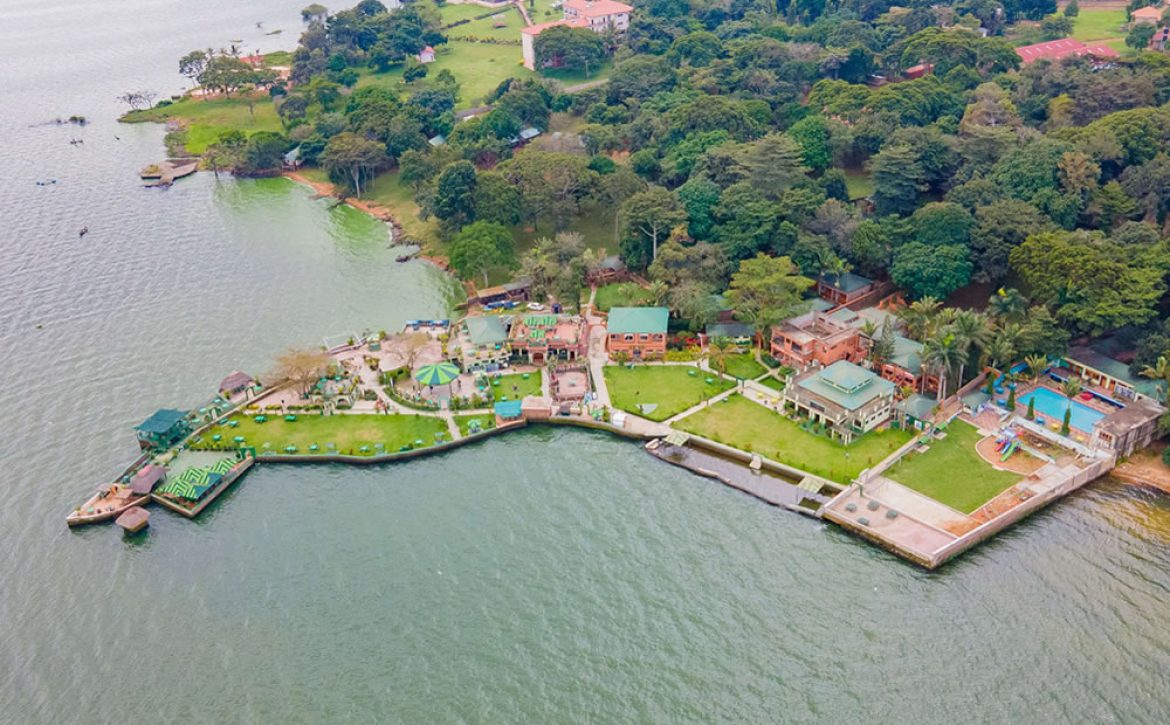
From the scenic view of Lake Victoria, beautiful green gardens to honeymoon cottages and boat rides, Country Lake Resort, Garuga is a perfect getaway. Before you opt for a holiday destination abroad, look at Country Lake Resort-Garuga. It may be just what you were looking for the perfect holiday. Often times, when people want to […]

Read More

Things to Consider When Renting a Car in Uganda

Getting the best rental car in Uganda, East Africa can be stressful whether first time or as a repeat traveler on Uganda safari. If you have plans to explore Uganda, a rental car is considerably the best alternative for your movement to and from your dream destination. With so many car hire agencies offering related car rental services, finding the best deal also becomes challenging. This is why you need to put into consideration the following steps and tips.

  • Find at least 2 to 4 car rental companies or more to conduct your research before making the final decision. These should fit within your travel desires and it will help you make comparisons on a number of aspects including rates, rental deals with special offers, terms and conditions.
  • Contact a car hire company and inquire if there are special offers, availability, rates, pick-ups, hidden charges among others. Ask everything you want to understand before you pay for your car hire.
  • Select convenient pick up point. When renting a car for your Uganda safaris, ensure that you identify the most convenient point to pick up your rental car from once you land at Entebbe airport. You can choose to pick your car at Entebbe airport or adjacent area to the airport. Also, inquire if the car hire agency does provide free pick ups at the airport or within Kampala capital city.
  • Choose the best rental vehicle. Visitor travel needs differ and you should pick a vehicle that is suitable for your Uganda safaris. It should be accommodative depending on the number of people, luggage. For family tours we still have you sorted with our comfortable safari vans or self-drive tours using 4×4 Toyota Rav4.
  • Book your chosen car in advance. Now that you have made up your mind on the kind of vehicle to use on Uganda safari, take a step to have it reserved early to avoid disappointments. Do not wait for last minutes like others tend to do!

Read More

Imagine Uganda Without Gorillas

Imagine Uganda without Gorillas! Gorillas are a major pillar to Uganda tourism. You cannot talk of Uganda tourism and forget to talk about gorillas.  Gorilla trekking is a daily activity in Uganda’s Bwindi Impenetrable National Park and Mgahinga National Park. The current cost of Uganda Gorilla permit goes up to US$700 making it the most expensive tourist activity.

According to the last census, Uganda hosts over 400 mountain Gorillas making Bwindi and Mgahinga the most visited parks. In this article, let us asses Uganda tourism without gorillas.  Can it progress? Can Uganda still maintain the number of tourists received per annum? Are there other activities which can substitute gorilla trekking?

Yes, Uganda tourism can survive without gorillas. Uganda is gifted with a variety of other attractions that can attract a considerable number of tourists. If you would not like to fork out US$700 for a Uganda gorilla safari, there are many other adventures that you can include in your next Uganda safari holiday Below are some of other tourist attractions on which Uganda can depend apart from the gorillas. ;

Chimpanzees – regarded as our closest relation sharing 99% of our DNA. Trust me, Chimpanzees are amazing because they are intelligent and capable of using tools to perform their daily activities. Chimpanzees are interesting to see – they can use stones, stick and pods among others during their daily activities. Chimpanzee trekking occurs in Budongo Forest, Kibale National Park, Toro- Semuliki game reserve, Kalinzu Forest and Kyambura Gorge.  Chimpanzee permit is cheaper than Gorilla permit and the lowest is US$50 to US$200.

Golden Monkeys – Guests can visit Mgahinga National Park to see the amazing Golden monkeys. The current cost of Golden monkey trekking is US$90 and no need to pre-book. Once you visit Mgahinga, expect to hike to meet gorillas in the Mgahinga uplands. Golden Monkeys move in troops of about 50 members and offers a single trek compared to Gorilla trekking.

The savannah parks protect a variety of attractions – including animals, birds, relief, drainage features among others. Savannah parks in Uganda includes Queen Elizabeth National Park, Murchison Falls National Park, Kidepo Valley national Park, Lake Mburo national park and Semuliki National Park. The major tourist activity in such parks include Game viewing and boat trips. While in Uganda savannah parks, expect to see elephants, Antelopes, Lions, Giraffes, Zebras, Antelopes and Buffaloes among others.

Without Gorillas, Uganda can depend on Mountaineering – Mountain Rwenzori in western Uganda and Mountain Elgon in Eastern Uganda offers the best mountaineering services in Uganda, East Africa and Africa at large. The famous Mountains of the moon (Mountain Rwenzori) is interesting with snow capped peaks and lots of other attractions surrounding the mountain. Climbing Mountain Rwenzori will not only reward you the views of glacial features but also gain expertise and physical fitness.

Without Gorillas, Uganda can depend on boat trips – there many water bodies like Lake Victoria, Lake Kyoga, Lake Edward, Lake Gorge, Lake Albert among others. Rivers include Nile, River Katonga and so on.  Boat trip rewards the view of water loving mammals and birds- visit different islands- spend some period on the islands is amazing. Oh! Don’t forget boat trip on Kazinga channel to see water loving birds and mammals like crocodiles, Hippos, Monitor Lizards among others.

Uganda without Gorillas, can survive on culture – Uganda is among countries with rich culture. The country with many tribes offers unique cultural songs, dance, musical instruments, dressing codes among others. Such community is interesting to visit – do not forget to explore the unique culture of the IK (North Eastern Uganda) and the Batwa of south western Uganda.

Uganda is a basket of primates – Kibale National Park alone protects 13 primate species including Chimpanzees, Vervet monkeys, Black and white colobus Monkeys, Red-tailed monkeys, LHoest Monkeys, Grey checked Monkeys, Olive Baboon, Uganda Red Colobus, The potto, Patas Monkeys, Uganda Mangabey and so on. You can also meet primates in other parts of the country like Busitema (Olive Baboon), Uganda Wildlife Education centre (Former Entebbe Zoo) and Ngamba Island on Lake Victoria – for that case, Uganda welcomes primate lovers.

Historical sites like Uganda Museums, Uganda Martyrs shrine Namugongo, Kabaka’s Lake, Kasubi Tombs and so on. Such sites keep the historical tools, clothes among others.

In conclusion therefore, Gorilla trekking earns Uganda a lot of foreign exchange but the country can as well depend on others activities like Chimpanzee trekking, Golden Monkey trekking, Game viewing, Boat trip and Cultural tours among others.


Read More

Here is Why You Need to Go on a Self Drive in Uganda

Car rental services in Uganda are the most popular ways for one to explore what this country holds for the world at a visitors own time. With Self Drive Uganda, visitors have opportunity to explore and discover Uganda privately or alternatively while on guided safaris. We therefore have a wide of cars for hire that enable our clients to realize their dreams while on African safaris in the pearl of Africa. If you ever thought about realizing the value for your then contact our receptionist for car hire and you won’t regret in life. We pay attention tour client’s needs and ensuring quality provision is ideally one of our priorities.

Below are some of the reasons why you should embark on self drive safari in Uganda;

We offer wide range of care hire services, including corporate services especially business conference transfers, exquisite wedding parties transportation by offering classic vehicles such as the limousines and the luxury SUVs which can be used on corporate conferences. Our fleet of cars can also utilized by travelers on Uganda safaris as we also have a wide range of 4 by 4 safari vehicles especially the Land Cruiser, Toyota Rav4s, safari vans and others. For those who are interested in group tours, we still have you catered for with our classic minivans and coaster buses. As well, if you are first time or repeat traveler and you need to be transferred from the airport to your respective hotel, there is no need for you to get stranded, you are also covered as we have airport transfer services with the best cars which will deliver you safely and comfortably to your respective destination.

Fast and convenience rights from reservation, there is no need to struggle or line up in long queues to reach the receptionist to make a booking, visitors can simply do it via email and telephone contact and your car hire will be booked for you within the shortest time without necessarily you traveling physically to Uganda to make booking of your car of choice for self drive tour. Our clients can book cars of their choice while in their offices, at home, in the vehicles given the current technological changes which have resulted into smart phones, tablets and laptops which are compatible with websites of our car hire company in Uganda.

Reliability, all our car rentals are best for clients to realize their travel dreams in Uganda. We operate 24/7 and any time you contact us we shall be at your service. We have well trained, experienced, reliable, trusted and professional drivers to help take you through any part of Uganda for your vacation. They are time conscious and they can deliver you to your respective destination at that expected time.

Affordability, our 4 by 4 car rentals are pocket friendly and they feature roof tents which you can use as accommodation. You can also choose an ordinary 4 by 4 with no camping offers.

Unlimited travel, our car rentals are issued on unlimited mileage which means visitors can enjoy their safaris at their own pace.

Comfortability, our cars aren’t only better and reliable but also offer you that total comfort that any traveler deserves while on self safari in Uganda and our team can be contacted at any time for any assistance.

Absolute getaways, with self drive tours, visitors have a chance to retire the brain with amazing interaction with nature.

In conclusion, self drive safaris in any new destination including Uganda are more of adventurous. You have opportunity to explore and discover new interesting tourist sites own your own at your own time. The other advantage is that it offers better wildlife spotting experiences and close encounters for you and nature.

Read More

Choosing a Car Rental Company to Use in Uganda

Car renters always look at different factors before hiring a car. For your travels in Uganda here are some important facts that you should look at when choosing a car for your next trip. The answers are, in alphabetical order, the: age of the fleet; Please note that most car rentals in Uganda offer cars […]

Read More

Planning a Uganda Road Trip

Our car shuddered to a standstill beside a wooden sign on a deserted western region part of Uganda road. “This is fountain of the pearl of Africa”, I read as I stepped from the car into the shimmering mid day heat. We’d been heading through Queen Elizabeth National Park towards the Uganda-Rwanda border, to a town called Kisoro which boasted of a very conducive climate for a night. Unfortunately as we rounded a bend I was faced with a rock slide in progress and totally misjudged the clearance of my rented car from Uganda Self Drive a reputable car renting company in Uganda opting to try and drive over the bouncing debris. There were a series of sickening thuds and bangs which caused my partner and I to cringe, and the car to grind to a standstill after around a hundred yards, with an alarming flow of unidentified liquid pouring onto the road surface.

We both looked under the car at the damage, then at each other then down the long straight road ahead of us. On average we’d been passing another vehicle about every half an hour and we were around an hour’s drive from our isolated hotel. Around ten miles back down the road, we’d passed a small garage at a cross roads, with a sign which read ‘this shop protected by a sawed off shot gun 3 days per week. You guess which days’. We’d also seen a hand painted sign pointing to the hills reading ‘Ghost Town Road’. That was the only sign of life and it looked like we could be waiting for some time to be rescued.

After about 20 minutes, with my partner berating me for my lack of driving judgment as we sat in the now roasting car, the air conditioner having failed with the engine, I notice a speck on the horizon, tailed by a large dust cloud.”Told you we wouldn’t wait long”, I said, trying to sound optimistic. It took around 10 minutes before I noticed that I had to do some thing very fast. I reached for my mobile phone, called the car rental company from which we had hired the car. This company is so generous that it contacted it’s area agent and with in a blink of an eye a rescue car was at our footsteps and we were 0ffered another car and off we proceeded with our journey.

Archie the mechanic suggested we call the rental company and we were eventually put through to the nearest outlet, In Midland, which was about 250 miles away. It took us some time to convince the rental company clerk that there was no Chevrolet dealership nearby who could recover the vehicle, and that in fact there was very little at all between our location and where he was, around 5 hours drive away. He agreed to send a vehicle transporter which would recover our car and deliver a new one, though providing an address was something of a challenge – ‘From the crossroads, over a hill, round a bend, through a rockslide, along the road a few miles, by a sign. Yes the sign says something like ‘Beware of Mountain Lions…’

Try the Ghost Town’ suggested Archie, pointing us into the distant hills. ‘A Few of the people who live up there have no water so they go to the hotel to fill up. You might get lucky.’ And so we set off into the hills under a blazing sun, remembering the Mountain Lion sign and jumping at every snapping twig.

Eventually we arrived Kabale town which is at the border of these two countries for at least a night before embarking on our journey. Reclaimed by a hardy bunch of artists, musicians, loners and eccentrics. Today, Kabale boasts a couple of eating options, some shops and lodgings and as we trudged, sweating into town we were greeted by the site of a graveyard with tumbledown tombstones, a few scattered dwellings in various states of disrepair…and the Starlight Theatre. An incongruous sight in this far flung corner of western Uganda, the Starlight had once provided entertainment for the miners and their families. Now it had been converted into the Ghost town’s only bar, and its appearance was so unexpected I almost expected it to fade, mirage like, from view as we approached.

There are some meals that stick in your memory. Sometimes because of their quality, but often because you were so hungry that whatever you ate would seem like a sumptuous banquet. Similarly with drinks. On an occasion where your mouth is parched and dry and you feel that you’ve perspired every last bead of sweat from your body, an ice cold beer can live as long in the memory as a bottle of the finest champagne. And so it was with the icy bottle of Shiner Bock which I threw down in one gulp in that strange little bar.

The room was populated by a number of bewhiskered characters who all looked strangely similar to the mailman… in fact one of them was the mailman! He raised an arm in greeting, while some of his drinking buddies glanced in our direction but barely raised a bushy eyebrow. It seemed that two sweaty, red faced, stranded travelers stumbling into their local bar was a regular occurrence. We sank a couple more cold beers and began to consider how we’d get back to the hotel to await delivery of the replacement car. It seemed that no one was making a water run that day so we headed back to the Main Road.

After around 20 minutes, a VW Beetle of late 60’s vintage, rounded a bend and chugged towards us. It was driven by a middle aged woman with matted hair, accompanied by a scowling teenage girl in the front seat and a snot nosed toddler and two exuberant dogs in the rear. As is the custom in the middle of nowhere, the car lurched to a halt, and the woman leaned out to ask where we were heading. She shook her head at being told our destination, telling us she was heading to ‘a rock’ around half way along the road. “I can take you there if you like” she drawled “you could even walk from there it’s only about 15 miles”. Intrigued by the prospect of visiting a rock in the middle of nowhere we climbed aboard and she introduced herself as Jessie. Noticing us scratching after a couple of miles, she looked in the rear view mirror and shouted ‘The dogs have got fleas and they sleep back there’. The toddler beside us, Marvin, grinned a toothless smile and scratched away beside us.

After around 20 minutes we rounded a bend surrounded by low cliffs and Jessie stopped the car. The family disembarked and we followed. Jessie opened the boot and produced three bouquets of flowers which she thrust into the arms of the still scowling, nameless teenage girl. We all headed towards a large rock which threatened to encroach onto the carriageway. It was decorated with paint from a number of vehicles and at its base were a scattering of long dead blooms which Jessie brushed aside with a once white training shoe. “My man wrecked his truck here last year”, she explained. “We’ve just popped by to say hello”. The teenage girl held her younger brother and squatted by the curbsides as her mother placed the flowers whilst singing an unidentifiable Country and Western tune. Feeling uncomfortable at being present at such a private moment, we thanked Jessie, bid the family farewell and set off walking along the road in the direction of our hotel which, as had been pointed out, was only about 15 miles away.

We’d been walking about 20 minutes when a distant rumble heralded the arrival of our final lift of the day- a battered blue pick- up truck with a white haired, mid 60’s woman at the wheel. The flatbed of the truck was full of water canisters so we squeezed in the cab alongside her. Her name was Margaret, and we were in luck, she was going to the hotel to top up her water supplies. She was wearing two odd boots, a pair of dungarees that had obviously belonged to a giant, and a pair of John Lennon style spectacles. She was also drinking from a can of beer and had a carrier bag of ‘refreshments’ in the foot well of the cab. She handed us a beer each and we set off, with Margaret entertaining us with tales of her freewheeling life. A true Hobo, she’d lived all over the world and now lived in a shack in the hills with a large hole in the roof which she told us “Don’t matter anyway, ‘because I sleep out on the porch all year round”.

Margaret approached driving as she approached life- with a ‘devil may care’ attitude, and we flew round corners on the wrong side of the road, with Margaret struggling to turn the wheel as she hung onto her tin of beer. She’d swig off the last remnants of the can with a slurp, hurl the can from the window and retrieve a replacement from the bag at her feet. Bumps in the road didn’t seem to register with this aged rally driver and we regularly seemed to take off, car chase style, and land with a bang as beer sloshed onto the wind shield from our 3 cans. It was a relief as we finally screeched round a bend and onto the hotel’s gravel car park in a cloud of dust.

We helped Margaret fill her water cans and limped to our room to await the delivery of our new car. We were hot, hungry and dusty and ached all over. We’d trashed a car in the middle of nowhere, drunk in a ghost town bar, been bitten by fleas and driven home by a drunken pensioner. But we’d had a classic road trip day – meeting interesting characters who helped us out of a tricky situation. The only disappointment was that we never did get to see that beer drinking goat!

Read More

Extend Your Safari to Rwanda

Many travelers would like to combine their Uganda safari with an extended exploration into the top adventure sites in Rwanda. Located in the Southern Part of Uganda, Rwanda is an amazing country to enjoy a gorilla safari in Africa. Many travelers who would like to maximize their gorilla watching experience combine their holiday to both countries.

There are so many different places to consider when planning a vacation. Many people automatically decide on a tropical island or beach vacation, but there are many more adventurous and wonderful spots that can bring lifetime memories and not be the same old vacation that you are used to. Rwanda safaris are amazing safari vacation packages that allow you to see a completely different side of our amazing world. There are wildlife safaris, where you will tour spots of Rwanda and see how the wildlife lives in their own habitat. There are jungle safaris where you will travel through the jungle with an experienced guide and witness jungle life as it is happening. There are gorilla trekking safaris where you will walk among the gorillas and see just how they exist in nature. This is an amazing and different experience that will bring lasting memories, and it is also a great way to bring the family closer together, by becoming one with nature!

If you have always been curious about other parts of this world and are interested in nature, a good idea for your next vacation might be a safari trip. Rwanda safaris offer an experience simply like no other. You will go on a guided tour through the jungles and landscape of Rwanda, where you will see with your own eyes nature at its finest. You will see the gorillas in their habitat, and you will see lions and tigers. You will see plant life that you never knew existed, with all the brilliant colors of a storybook. Taking a safari vacation is a serious life changing experience. You will be touring with a professional guide who knows exactly what to do, and there may be other travelers in your group, who you can get to know and possibly make a lifelong new friend! There are various types of safari tours as well, so you will be able to go on the safari tour that most interests you.

Read More

Kidepo National Park Turns 50 Years Old

This month, Kidepo Valley National Park is celebrating 50 years since it was gazetted as part of the independence celebrations. Hilary Bainemigisha visited the park and brings you first hand information of what more is needed, beyond the Golden Jubilee Kidepo valley was like a beautiful nun in a convent, inaccessible to suitors, but attractive. […]

Read More